

Schwandorf district in the Upper Palatinate
Schwandorf District: 33 Municipalities between Lakeland and the Upper Palatinate Forest
Water glitters at Lake Steinberg, while large industrial halls stand in Wackersdorf. In Nabburg, the old town rises above the Naab River. Towards Schönsee, the roads become smaller and the forests denser. All of this belongs to the Schwandorf district.
To the south lies the "Städtedreieck" (city triangle) around Burglengenfeld. Further north, the Upper Palatinate Lake District begins. Towards the east, the landscape becomes more forested and rises significantly. Near the Czech border, the district shows its quietest, most expansive side.
Schwandorf District in numbers: At the end of 2025, 149,363 people lived here. The area is 147,278 hectares. The district includes 33 municipalities. Ten municipalities have city rights. Six are designated as market towns.
How big is the Schwandorf District?
The Schwandorf district covers approximately 1,473 square kilometers. Its longest diagonal extension reaches almost 90 kilometers. From north to south, the area measures almost 48 kilometers. The west-east extension is just over 41 kilometers.
This size is quickly felt when driving through the district. Schwandorf and Schönsee are in the same administrative unit. Nevertheless, the landscape and distances differ significantly. The district stretches almost to Regensburg and directly to the Czech Republic.
The highest point is at the Weingartenfels near Schönsee, reaching 898 meters above sea level. The lowest point is near Nittenau. There is a difference of about 600 meters in altitude between these two points.
In which region is Schwandorf located?
Schwandorf is located in the Upper Palatinate in the Free State of Bavaria. This applies to both the city and the district. The district is located in the central part of the administrative region. Its eastern border also forms a section of the German border with the Czech Republic.
Regensburg is south of the district area. Weiden is north of the region. East of the district, the Czech Republic begins directly. This location connects East Bavaria with western Bohemia.
The A6 and A93 motorways play an important role in transport. The A6 leads towards Nuremberg and the Czech Republic. The A93 connects Regensburg with the north of the Upper Palatinate. Several railway lines also converge in the city of Schwandorf.
How many inhabitants does the Schwandorf District have?
As of December 31, 2025, the Schwandorf district had 149,363 inhabitants. This number comes from the official district statistics. The population is distributed among 33 municipalities. Schwandorf itself is by far the largest city in the district area.
The inhabitants are by no means evenly distributed across the area. In the south, there are several more densely populated cities. Rural communities, on the other hand, characterize large parts of the east. Small towns there are often located between wooded areas and agricultural land.
Important for your search: The city of Schwandorf and the district of Schwandorf are different. The city has about 31,000 inhabitants. The district has almost 150,000 inhabitants. Many Google queries confuse both areas.
How many municipalities does the Schwandorf District have?
The Schwandorf district consists of 33 municipalities. Ten of these have city rights. Six municipalities officially bear the designation "Markt" (market town). The remaining seventeen are regular municipalities.
Among the larger cities is the district capital Schwandorf. Burglengenfeld forms a strong center in the southern district area. Maxhütte-Haidhof is also located in the more densely populated south. Neunburg vorm Wald characterizes the eastern part of the district.
Nabburg is located north of Schwandorf on the Naab. Oberviechtach fulfills important functions in the northeastern district area. Wackersdorf is particularly known for industry and the lake district. Steinberg am See is closely associated with Lake Steinberg.
Seven administrative communities bundle the tasks of several smaller municipalities. This allows small municipalities to remain politically independent. Administrative tasks can still be carried out jointly. This model is widespread in rural parts of Bavaria.
How many districts does Schwandorf have?
The city of Schwandorf has 61 districts. This number refers exclusively to the large district town of Schwandorf. The district itself does not have a uniform number of districts. Its 33 municipalities each have their own districts and localities.
This distinction is particularly important for searches. Schwandorf districts usually refers to the city. Schwandorf district municipalities, on the other hand, refers to the entire district area. Search engines occasionally mix both levels in the same questions.
Is Schwandorf a major city?
No, Schwandorf is not a major city. The city has about 31,000 inhabitants. In Germany, cities are considered major cities if they have 100,000 inhabitants or more. However, Schwandorf is the largest city in the district of the same name.
The district itself cannot be a major city. A district is a municipal territorial corporation. It comprises numerous independent cities and municipalities. The administrative seat of the district is the city of Schwandorf.
What is the vehicle registration plate for Schwandorf?
The most common vehicle registration plate in the Schwandorf district is SAD. The letters are derived from the name Schwandorf. Therefore, SAD is very common throughout the district. In addition, historical license plates from former district structures have been preserved.
A well-known example is BUL for Burglengenfeld. This abbreviation is a reminder of the former Burglengenfeld district. The license plates thus tell a piece of administrative history. Old district boundaries remain visible on some cars to this day.
What was Schwandorf called previously?
The city of Schwandorf was first mentioned around 1006 as "Suainicondorf". The current name only developed over many centuries. This question concerns the city and not the present-day district. The Schwandorf district in its current form was only created in 1972.
At that time, several former districts were merged. Burglengenfeld contributed a large southern area. Nabburg characterized the northern part of the new structure. Neunburg vorm Wald and Oberviechtach were also added.
Parts of the former Roding district supplemented the new district area. The previously independent city of Schwandorf became part of the district. This created a completely new administrative unit. Old regional identities nevertheless remained alive in many places.
More about the city itself can be found in the article Schwandorf in the Upper Palatinate – History and regional development. That article focuses more on city history and well-known places. The district article, on the other hand, considers the entire region.
What is Schwandorf known for?
For the Schwandorf district, industry and the lake district are defining themes. The Upper Palatinate Lake District emerged from former lignite opencast mines. Today, large bodies of water characterize the area around Wackersdorf. The economic transformation of this region is exceptionally visible.
Lake Steinberg is one of the most popular excursion destinations. Its surroundings offer water sports and numerous recreational opportunities. Lake Murner is only a few kilometers away. Further east, Lake Eixendorf shapes the landscape near Neunburg.
In the east, the character of the district changes significantly. Forests become denser and mountain ranges more striking. Schönsee is close to the Czech border. There, a landscape with a strong Upper Palatinate Forest character begins.
Industry is also firmly part of the district's identity. Wackersdorf today stands for modern production and automotive technology. The former WAA site developed into an innovation park. This development continues to shape the economic image of the region.
Who is the largest employer in Schwandorf?
An official ranking of all employers in the district is not published. BMW is one of the largest employers in the region in Wackersdorf. Several companies work side by side in the innovation park. In total, several thousand jobs are created there.
In the city of Schwandorf, HORSCH is one of the largest employers. The company employs more than 1,000 people there. Other large employers are located in several municipalities in the district. The economic structure is therefore distributed across various locations.
Anyone searching for the largest employer in Schwandorf should differentiate carefully. The city and the district provide different answers. For the district, Wackersdorf plays a particularly strong economic role. For the city of Schwandorf, HORSCH is an important major employer.
Schwandorf District Job Openings: Where are jobs created?
Job openings in the Schwandorf district come from a wide variety of sectors. Industry provides a large proportion of regional jobs. Administration regularly seeks skilled workers and junior staff. Healthcare and skilled trades also play an important role.
The district operates its own career portal for administrative positions. In addition, there is a regional network for companies. Jobs from several companies are bundled there. Therefore, it is worthwhile for applicants to search beyond individual cities.
Wackersdorf attracts many commuters from the entire region. Schwandorf offers jobs in retail and at larger companies. Burglengenfeld also has a strong economic location. Smaller municipalities often benefit from easily accessible industrial areas.
What are the opening hours of the Schwandorf District Office?
The District Office is open Monday to Thursday from 8:00 AM to 3:30 PM. On Fridays, the office is open from 8:00 AM to 12:00 PM. Special hours may apply for individual departments. Making an appointment saves unnecessary waiting time for many concerns.
The central administration is located at Wackersdorfer Straße 80. Numerous specialized departments of the District Office are located there. There are also satellite offices for individual tasks. Therefore, it is worth checking the responsible location before a long journey.
Separate hours may apply for vehicle registration and the driving license office. For these areas, the current status should be checked. Opening hours can change due to holidays or organizational reasons. This note is important for a permanent article.
What does the Youth Welfare Office do in the Schwandorf District?
The District Youth Welfare Office Schwandorf is part of the District Office. It supports children and young people in various life situations. Parents can also receive advice and help there. Responsibilities depend on the specific concern.
Tasks include, for example, guardianships and educational assistance. Social services work with families in difficult situations. Other specialist departments deal with early intervention. Youth welfare planning is also part of the district's responsibilities.
The District Youth Welfare Office is located at Wackersdorfer Straße 80. For many concerns, prior contact is advisable. Responsible caseworkers may be assigned based on place of residence or task. This ensures that an inquiry reaches the right department faster.
What is the Building Authority in the Schwandorf District responsible for?
The district's Building Authority handles numerous tasks related to building law. The building inspectorate examines projects within the jurisdiction of the district administration office. Building permits are among the most important tasks. Building advice helps even before a specific application.
The office also deals with urban development planning. Monument protection is also handled there. The expert committee deals with property values. Funding issues for housing also fall within this administrative area.
For building applications, the correct jurisdiction is particularly important. The district works with two building districts for this purpose. Each district is assigned its own building team. The location of the property determines the responsible contact person.
What does the Immigration Office do in the Schwandorf District?
The Immigration Office is part of the Schwandorf District Office. It processes residence-related matters for eligible persons in the district area. Residence permits may be among its tasks. Declarations of commitment are also processed there.
Several procedures are now available digitally. These include certain applications related to residence and nationality. However, in-person appointments have not completely disappeared. For complex cases, a prior appointment is recommended.
Jurisdiction depends on the place of residence and the respective procedure. Therefore, the appropriate procedure should be selected in advance. This avoids unnecessary paths within the administration. For current documents, the respective official information always applies.
How is the fire department organized in the Schwandorf District?
Fire departments at the district level are coordinated by the District Fire Inspectorate. It forms the technical link to the District Office. At its head is the District Fire Chief. Several inspection areas structure the work in the large district area.
The local fire departments remain anchored in their municipalities. District-wide leadership becomes particularly important in larger situations. Forest fires or storms can demand many fire departments simultaneously. Training and specialized tasks are therefore coordinated regionally.
The district has large forest areas and several important traffic arteries. In addition, there are industrial companies with special requirements. Technical assistance therefore plays a significant role. Disaster control works closely with the fire department structures.
Are there blue-green algae in the Schwandorf District?
Blue-green algae are not a permanent condition in all bathing waters in the district. Cyanobacteria can multiply significantly at times under suitable conditions. Therefore, bathing waters are monitored during the season. Warnings always refer to specific lakes and time periods.
Lake Steinberg is regularly monitored as an EU bathing water. Samples from the 2026 bathing season showed no bacterial abnormalities. At Klausensee, no known cyanobacteria danger was reported in 2026. Other waters may be assessed differently at times.
In August 2026, the Höllohe bathing area was additionally examined. No blue-green algae were detected in two samples there. However, these results apply only to the respective examination period. Therefore, the current situation should always be checked before swimming.
For lakes, the current status is what matters. A water sample is always a snapshot. Heat and nutrient inputs can change conditions within a short time. Therefore, current warnings are more important than older search results.
What is particularly worthwhile in the Schwandorf District?
The district is best explored through its contrasts. Around Lake Steinberg, the region almost feels like a holiday area. A few kilometers further, industrial buildings recall Wackersdorf's recent history. In the east, forests and smaller towns dominate the landscape.
Historic towns add another dimension. Nabburg boasts a visible historic town center. Burglengenfeld is strikingly situated on the Naab. Neunburg vorm Wald combines old town charm with a lake landscape in the eastern district.
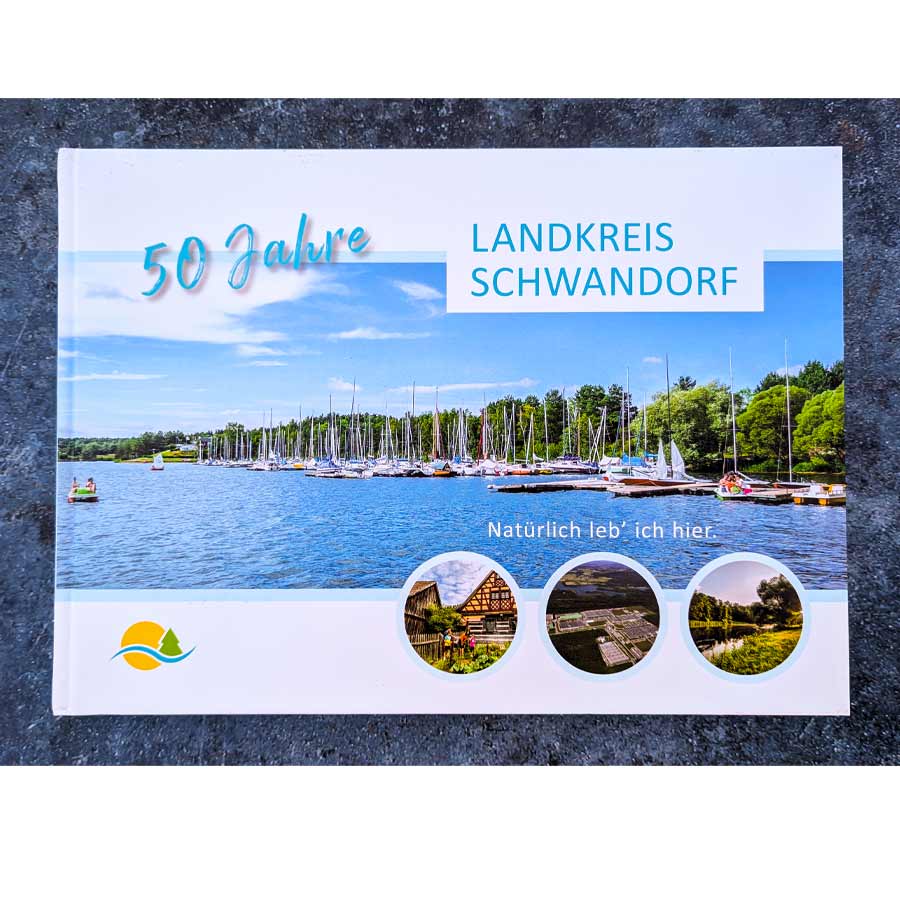
The district capital Schwandorf forms the economic and administrative center. Its history dates back over a thousand years. More historical images can be found in the illustrated book about Schwandorf and former municipalities. However, the district itself tells a much larger story.
Schwandorf District: A Region with an Unusually Many Sides
Schwandorf is both a district town and the namesake of a large district. This dual role explains many similar search queries on Google. By distinguishing clearly, you can quickly find the right information. City questions require different answers than district questions.
The district combines industry with extensive natural areas. Lakes characterize the center of the district. Forests dominate large areas in the east. Towns along the Naab provide historical and economic centers.
From Lake Steinberg, the district extends to the Czech border. In between are 33 municipalities, each with its own unique character. Industry has its place here, as do forests and historic towns. This diversity creates the special character of the Schwandorf district.
Sources and Status: Schwandorf District Office, Bavarian State Office for Statistics, City of Schwandorf, Schwandorf District Fire Inspectorate and Schwandorf Health Office. Data status: September 2026. Population figures: As of December 31, 2025.


